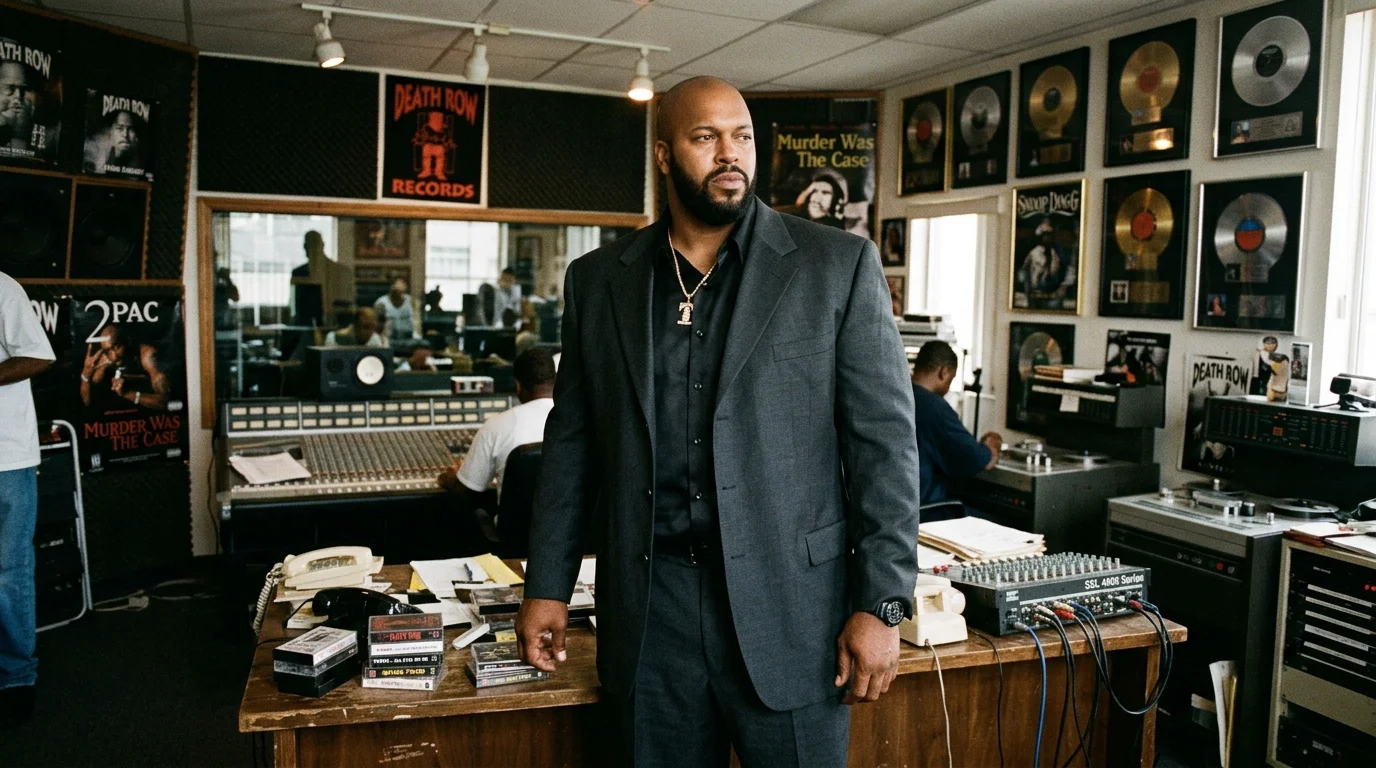
Suge Knight’s net worth in 2026 sits at roughly $200,000, a figure sources close to his finances describe as mostly royalty income and small assets left after years of lawsuits and bankruptcy filings. Born Marion Hugh Knight Jr. on April 19, 1965, in Compton, California, he is 61 years old and stands 6 feet 2 inches tall. Knight built his fortune as the co-founder of Death Row Records and is currently serving a 28-year prison sentence at the Richard J. Donovan Correctional Facility in San Diego County.
That $200,000 figure is a steep drop from the more than $100 million he was once reported to control at Death Row’s commercial peak in the mid-1990s. The gap between those two numbers is one of the largest financial falls in music industry history, and it explains why Suge Knight’s net worth remains a frequent search topic decades after Death Row’s biggest hits.
Quick Facts
| Detail | Information |
| Full Name | Marion Hugh Knight Jr. |
| Date of Birth | April 19, 1965 |
| Age | 61 |
| Birthplace | Compton, California |
| Height | 6 ft 2 in (1.88 m) |
| Occupation | Former record executive, businessman |
| Known For | Co-founder, Death Row Records |
| Net Worth (2026) | Approximately $200,000 |
| Current Status | Incarcerated, Richard J. Donovan Correctional Facility |
| Children | 6 |
Early Life and Biography
Marion Hugh Knight Jr. grew up in Compton as the youngest of three children. His father worked as a janitor, and his mother worked on an electronics assembly line, a background Knight has referenced when describing his early drive to build something of his own. He earned the nickname “Sugar Bear,” later shortened to “Suge,” as a child.
Knight attended Lynwood High School, where he played football and ran track. He was a defensive end good enough to draw college interest, and he played at El Camino College before transferring to the University of Nevada, Las Vegas. His size and athleticism led to a brief professional football career: he signed with the Los Angeles Rams in 1987, though he did not stick with the team for long.
After football, Knight moved into the music business as a bodyguard and manager for artists including Bobby Brown and The D.O.C. Those connections gave him the industry access and negotiating leverage he needed to build his own label a few years later.
Knight also spent time working on publishing deals before Death Row existed, tracking down songwriters and producers owed money by labels and negotiating settlements on their behalf. That experience taught him how contracts, royalties, and publishing splits worked in practice, knowledge he later used to structure Death Row’s own artist deals. It also introduced him to the industry figures who would help finance his label in 1991.
Career Timeline
Knight co-founded Death Row Records in 1991 alongside Dr. Dre, and the label became the commercial engine of West Coast gangsta rap for the rest of the decade. Two releases defined that run: Dr. Dre’s “The Chronic” in 1992 and Snoop Dogg’s “Doggystyle” in 1993, both multi-platinum albums that turned Death Row into the most talked-about label in hip-hop.
Tupac Shakur signed with Death Row in 1995 after Knight paid roughly $1.4 million toward his bail, and Tupac’s “All Eyez on Me” became one of the label’s biggest sellers. At its commercial peak, Death Row had sold more than 100 million records worldwide and generated hundreds of millions of dollars in revenue.
Much of that success came from a distribution agreement with Interscope Records, which handled marketing and retail placement while Death Row kept a larger share of the profits than most artists or labels received under a traditional major-label contract. That structure is one reason Knight’s personal wealth grew so quickly in the early 1990s. Death Row also built a reputation for aggressive contract enforcement, with Knight personally overseeing negotiations and, according to multiple lawsuits filed by former artists and employees, using intimidation tactics to keep talent from leaving the label.
The label’s fortunes turned after Tupac’s murder in September 1996. Dr. Dre had already left to start Aftermath Entertainment, and Snoop Dogg departed not long after. Knight’s own legal troubles piled up through the late 1990s and 2000s, including a parole violation tied to a 1996 assault that sent him back to prison, repeated arrests, and a string of civil lawsuits from former business partners and artists.
Death Row Records filed for bankruptcy in 2006. The label’s assets were sold at auction in 2009 to WIDEawake Entertainment Group, cutting Knight off from any further ownership stake. Between 2001 and 2015, Knight made several attempts to rebuild his standing in the music business, launching smaller ventures and production deals, but none came close to replicating Death Row’s earlier success, and each attempt was interrupted by fresh legal problems, including parole violations and civil suits.
In 2015, Knight was involved in a fatal hit-and-run in Compton during an argument on a film set, striking and killing Terry Carter. He pleaded no contest to voluntary manslaughter in 2018 and received a 28-year prison sentence, which he is still serving at the Richard J. Donovan Correctional Facility. Reports on his time in custody describe ongoing health issues, including diabetes and vision problems, that have required medical treatment during his incarceration. In 2022, Snoop Dogg purchased the Death Row Records name and catalog rights, closing the loop on a label Knight no longer had any claim to.
Net Worth Breakdown
At his financial peak in the mid-1990s, Knight was widely reported to be worth more than $100 million, drawn from his ownership stake in Death Row Records and the label’s share of album sales, publishing, and touring revenue. That figure fell sharply once the label’s legal bills, unpaid royalty judgments, and bankruptcy proceedings caught up with him.
Public estimates of his 2026 net worth vary depending on the source, ranging from roughly $200,000 up to around $1 million, with some financial write-ups arguing his liabilities from old judgments still outweigh whatever assets remain in his name. The wide range reflects how little verified financial information becomes public once a person is incarcerated and no longer running an active business. What most estimates agree on is the scale of the drop: from a nine-figure fortune to a net worth in the low six figures or less.
None of the current estimates are based on an audited financial statement, since Knight has not filed for any new public bankruptcy proceeding in recent years and his finances while incarcerated are not routinely disclosed. Readers should treat any specific dollar figure as a public estimate rather than a confirmed balance, though the overall direction- a fortune that shrank from nine figures to six figures or less- is well documented across bankruptcy filings, court records, and industry reporting from the 2000s onward.
Knight lost his Malibu mansion, which sold for $4.56 million in 2008, well under its earlier market value, as part of efforts to cover his debts. Court records tied to his 2006 bankruptcy filing listed a long line of creditors, including former Death Row artists and executives pursuing unpaid royalties and settlement judgments. Those debts followed him for years, absorbing income that would otherwise have gone toward rebuilding his personal wealth.
He does not hold any ownership interest in Death Row Records today. The label operates under Snoop Dogg, and Knight receives no share of its current revenue. Any money the label earns now from catalog streaming, licensing, or reissues goes to its current owners, not to Knight or his estate.
Income Sources
Knight’s income today comes from a narrow set of sources compared to his years running Death Row. He still collects some royalty payments tied to his original ownership credits on classic Death Row releases from the 1990s, though those payments are modest and often subject to garnishment from outstanding legal judgments.
He has also earned money through media rights connected to documentaries and dramatized retellings of his story, including consulting or rights payments for productions that cover the Death Row era. Beyond that, reporting on his finances points to very little active income, since incarceration rules out any new business activity, and he has no salary, executive role, or equity stake left in the music industry.
This is a sharp contrast to his peak years, when Death Row’s revenue came from album sales, publishing rights, artist contracts, and a distribution deal with Interscope Records that made the label one of the most profitable independent labels in the business.
Legal costs have also taken a steady toll on whatever income Knight does receive. Attorneys involved in his various cases over the years have described his legal bills as running into the millions of dollars across multiple trials, appeals, and civil suits, a burden that continues to reduce any royalty or media payment before it reaches him.
Family
Knight has been married twice. His first wife, Sharitha Golden, worked as a manager in the music industry and was closely involved in his early career before their marriage ended in divorce amid legal disputes and restraining orders. His second marriage, to R&B singer Michelle Michaels, took place in 1999 while Knight was incarcerated. That marriage was later ruled void because Knight’s divorce from his first wife had not been finalized at the time.
Knight has six children. He has kept most details about his children’s lives private, and none of them have taken on a public role in the music industry or in managing what remains of his estate. His family background traces back to Compton, where his parents, Maxine and Marion Knight Sr., raised him and his two siblings.
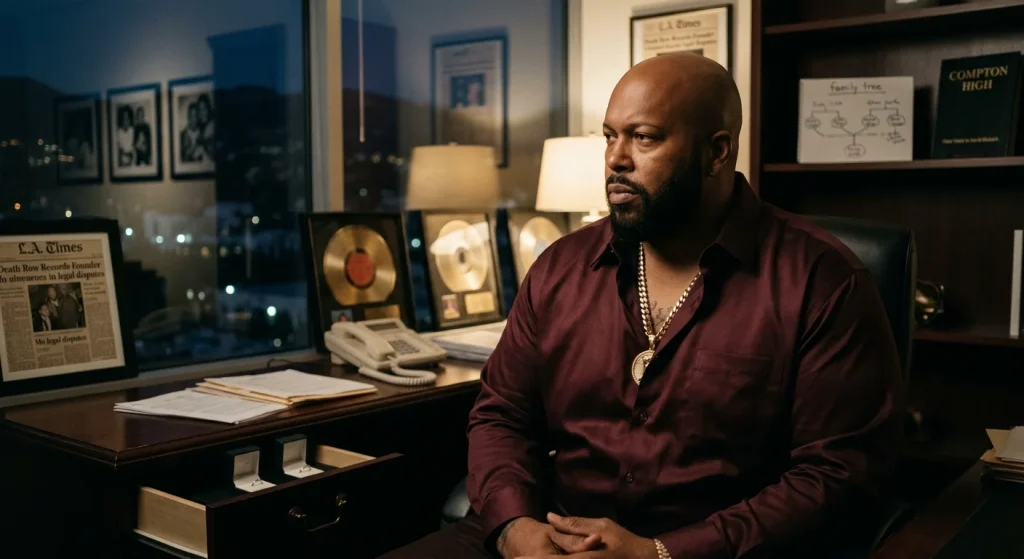
Knight’s parents worked steady blue-collar jobs, his father as a janitor and his mother on an electronics assembly line, and by most accounts they were not part of the entertainment industry themselves. That upbringing is part of why his rapid rise at Death Row Records drew so much attention in the early 1990s, since he built a multimillion-dollar label without the family connections that helped many of his industry peers get started.
Physical Stats
Knight is listed at 6 feet 2 inches tall and played at around 265 pounds during his football career at UNLV and his brief stint with the Los Angeles Rams. His size became part of his public image once he moved into the music business, where his physical presence reinforced the intimidating reputation that followed him through the Death Row years.
He was born under the Aries zodiac sign on April 19, 1965, and turns 61 in 2026. Photos from his years running Death Row Records show a heavier build than his playing days, consistent with the transition from an active football career to an executive role.

His physical presence was frequently mentioned in music industry coverage from the 1990s, often alongside descriptions of his blunt negotiating style. That combination of size and reputation is part of why his name still comes up whenever discussions turn to the most powerful, and most feared, executives in hip-hop history.